Evaluating Hand Painted Pink Purple Rose Clipart for Professional and Personal Design Projects
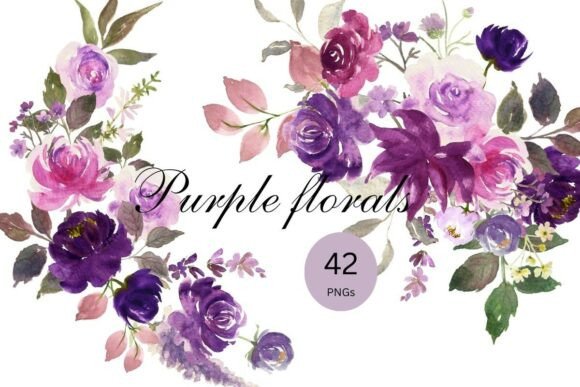
When curating visual assets for branding, stationery, or digital art, the choice of illustration style significantly impacts the final aesthetic. Among the vast array of digital resources available, hand painted pink purple rose clipart has emerged as a distinct category that bridges the gap between traditional artistry and modern digital utility. This specific style, characterized by soft watercolor washes in violet, lavender, and blush tones, offers a level of organic texture that vector graphics often struggle to replicate. For designers, small business owners, and crafters, understanding the nuances of this medium is essential before integrating it into a workflow.
This article explores the unique properties of hand-painted floral bundles, specifically those featuring 32 individual elements including wreaths, bouquets, and borders. It examines where these assets fit within the broader design landscape, compares them to alternative formats, and helps you decide if this approach aligns with your project requirements.
The Distinctive Appeal of Watercolor Textures
The primary differentiator of hand painted pink purple rose clipart lies in its creation process. Unlike flat vector illustrations created with mathematical paths in software like Adobe Illustrator, these images originate from physical media—typically watercolor paints on paper. The artist manipulates pigment and water to create natural gradients, bleeding edges, and varied opacity. When scanned and digitized at high resolutions, such as 300 DPI, these files retain the subtle imperfections that give them character.
In a market saturated with clean, geometric, and overly polished digital art, the watercolor style provides a sense of warmth and authenticity. The interplay of pink and purple hues evokes feelings of romance, elegance, and tranquility. This makes the style particularly effective for industries where emotional connection is paramount, such as wedding planning, boutique branding, and wellness products. The "hand-painted" label is not merely a marketing term; it signifies a textural depth that adds a tactile quality to digital screens and printed materials alike.
Comparing Formats: Raster vs. Vector vs. Hand-Painted Digitization
To make an informed decision, one must compare hand-painted raster images against other common graphic formats. Each has strengths and limitations depending on the intended application.
- Vector Graphics (SVG/EPS): Vectors are infinitely scalable without losing quality. They are ideal for large-format signage or logos that need to be resized frequently. However, vectors often lack the organic texture of watercolor unless complex mesh gradients are used, which can increase file size and processing power. If your project requires crisp, hard edges and infinite scalability, a vector might be superior.
- Standard Digital Illustrations: These are drawn directly on a tablet. While they can mimic watercolor, they sometimes appear too uniform or "perfect." They lack the random flow of real pigment.
- Hand-Painted PNGs: This is the format typical of the 32-element bundles described earlier. Provided as high-resolution PNGs with transparent backgrounds, they offer immediate usability in programs like Canva, Photoshop, and Procreate. The trade-off is resolution dependency; while 300 DPI is sufficient for most print projects up to poster size, they cannot be enlarged indefinitely like vectors.
For users working on wedding invitations, greeting cards, or sublimation projects, the 300 DPI standard found in quality hand-painted bundles is usually more than adequate. The priority here is aesthetic richness rather than infinite scalability.
Practical Applications and Best-Fit Scenarios
Understanding where hand painted pink purple rose clipart excels helps in allocating budget and time effectively. The versatility of a bundle containing 10 floral arrangements, wreaths, and individual blooms allows for diverse applications.
Wedding and Event Stationery
This is perhaps the most natural fit. The soft purple and pink palette aligns perfectly with spring and summer wedding themes. Designers can use the pre-made wreaths for "Save the Date" cards or combine individual roses and leaves to create custom borders for menus and programs. The watercolor style conveys a romantic, bespoke feel that resonates with couples seeking a non-corporate look.
Branding and Packaging for Small Businesses
Boutiques selling handmade soaps, candles, or artisanal teas often benefit from the organic look of watercolor florals. Using these elements on packaging labels or social media graphics can elevate a brand's perceived value, suggesting care and craftsmanship. However, businesses should ensure their logo remains legible when paired with these detailed textures; sometimes, simplifying the surrounding elements is necessary to maintain brand clarity.
Print on Demand and Sublimation
The high-resolution PNG format with transparent backgrounds is crucial for sublimation printing on mugs, tote bags, and apparel. The transparency ensures that the floral designs blend seamlessly onto colored fabrics without unsightly white boxes around the image. Crafters using Cricut or Silhouette machines also find these files valuable, though they may need to trace the image if a cut file is required, as PNGs are raster images.
Limitations and Decision Factors
While the aesthetic benefits are clear, potential users must consider the limitations. As mentioned, the reliance on raster files means there is a ceiling to how large the image can be printed before pixelation occurs. A 300 DPI image is excellent for standard paper sizes but may struggle on a billboard or a massive trade show banner.
Additionally, color consistency can be a factor. Watercolor paintings naturally have variations in tone. If your brand guidelines require a specific Pantone match for every element, hand-painted clipart might require color correction in post-production. In contrast, vector files allow for precise global color changes with a single click.
Another consideration is the learning curve for assembly. A bundle with 32 elements offers flexibility, but it requires the user to have a basic understanding of composition. Unlike a single, pre-designed template, these elements invite you to build your own arrangements. This is a strength for creative control but could be a hurdle for those seeking a quick, drag-and-drop solution without any design intuition.
Making the Right Choice for Your Workflow
Deciding whether to invest in a hand painted pink purple rose clipart set comes down to your specific project goals and technical constraints.
Choose this option if:
- You prioritize texture, depth, and an organic, artistic feel over perfect geometric lines.
- Your output medium is primarily print (invitations, cards, packaging) or digital screens where 300 DPI is sufficient.
- You use software like Photoshop, Canva, or Affinity Photo that handles layering and masking well.
- You want the flexibility to mix and match elements to create unique compositions rather than using static templates.
Consider alternatives if:
- You need to scale graphics to massive sizes (e.g., vehicle wraps, building signage).
- Your workflow relies heavily on global color changes and strict brand color adherence.
- You require editable paths for laser cutting or vinyl plotting without the need for auto-tracing.
Maximizing Value from Floral Bundles
When selecting a bundle, look beyond the preview images. A comprehensive set should include not just full bouquets, but also individual components—single roses, loose petals, leaves, and stems. This modularity allows for greater creativity. For instance, a designer might use a full wreath for a certificate border but strip out individual flowers to scatter across a patterned background.
Furthermore, verify the file specifications. True high-quality assets will specify 300 DPI and explicitly state that backgrounds are transparent. Low-resolution web scraps often appear blurry when printed, undermining the professional look you aim to achieve. The inclusion of various arrangements, from tight buds to full blooms, ensures that you have the right visual weight for different parts of your design layout.
In conclusion, hand painted pink purple rose clipart represents a powerful tool for adding elegance and human touch to digital projects. By weighing the textural benefits against the technical limitations of raster files, creators can determine if this style serves their vision. Whether for a wedding invitation suite or a new product line, these watercolor elements offer a timeless charm that continues to resonate with audiences seeking authenticity in a digital world.