Evaluating Coquette Watercolor Easter Bunny Ears for Spring Design Projects
The intersection of vintage aesthetics and modern holiday trends has created a unique niche in the digital design world, specifically within the realm of spring and Easter graphics. Among the various styles available to creators, Coquette Watercolor Easter Bunny Ears have emerged as a distinct option that blends soft, hand-painted textures with the playful, bow-centric motifs characteristic of the coquette trend. For designers, crafters, and print-on-demand entrepreneurs, understanding the specific attributes of this style is essential when selecting assets for commercial or personal projects. This evaluation explores what makes these watercolor designs stand out, how they compare to vector-based alternatives, and the practical considerations involved in integrating them into your workflow.
Defining the Aesthetic and Technical Profile
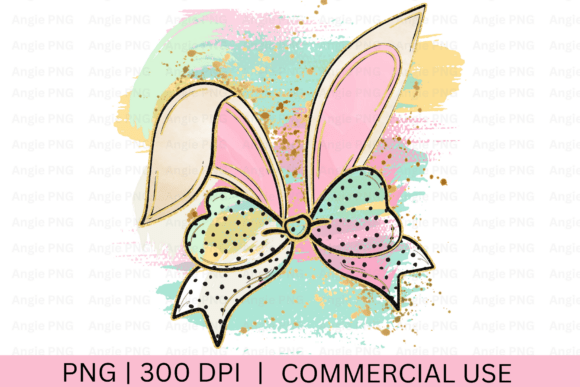
The term "coquette" in design typically refers to an aesthetic rooted in femininity, often featuring ribbons, bows, lace, and soft pastel palettes. When applied to Easter imagery, such as bunny ears, this style transforms traditional cartoonish representations into something more delicate and fashion-forward. The Coquette Watercolor Easter Bunny Ears design specifically leverages the fluidity of watercolor simulation to create depth and texture that flat colors cannot achieve. Unlike solid-fill graphics, watercolor styles mimic the way pigment bleeds into paper, offering organic edges and subtle color variations that feel handmade.
From a technical standpoint, these assets are frequently distributed as high-resolution PNG files, often at 300 DPI (dots per inch). This resolution is critical for physical applications. A 300 DPI ensure that when the image is printed on substrates like cotton t-shirts, ceramic mugs, or tote bags, the edges remain crisp and the color gradients do not appear pixelated. The inclusion of a transparent background in these PNG files is another vital feature, allowing the designer to layer the graphic over various colored fabrics or digital backgrounds without a white bounding box interfering with the composition. However, it is important to note that because these are raster images (PNGs), they differ significantly from scalable vector graphics (SVGs) in terms of editability and scaling limits.
Comparative Analysis: Watercolor PNGs vs. Vector SVGs
When sourcing digital assets for Easter collections, creators often face a choice between watercolor PNGs and vector SVGs. Understanding the trade-offs between these formats is crucial for determining if the Coquette Watercolor Easter Bunny Ears PNG is the right fit for your specific project.
- Texture and Realism: Watercolor PNGs excel in providing a realistic, artistic look. The blending of colors and the "wet-on-wet" effect are difficult to replicate in standard vectors without complex mesh gradients. If your goal is a soft, boutique, or hand-crafted feel, the watercolor format is superior.
- Scalability: Vector SVGs are mathematically defined, meaning they can be scaled infinitely without loss of quality. PNGs, being pixel-based, have a maximum size limit determined by their original resolution. While a 300 DPI PNG is sufficient for most apparel sizes (up to large format prints), it may not be suitable for massive signage or billboards where an SVG would be required.
- Editability: SVGs allow users to ungroup elements, change individual colors, and modify shapes directly within cutting machine software like Cricut Design Space or Silhouette Studio. In contrast, a PNG is a flattened image. You cannot easily isolate the bow from the ears or change the shade of pink without advanced photo editing software like Photoshop. The Coquette Watercolor Easter Bunny Ears PNG is designed to be used as-is or layered with text, rather than deconstructed.
- Application Method: For Direct-to-Garment (DTG) printing and sublimation, PNGs are often preferred because they handle complex color gradients and transparency better than many cut-vinyl workflows which rely on solid color blocks typical of SVGs.
Ideal Use Cases and Application Strategies
The versatility of the Coquette Watercolor Easter Bunny Ears design makes it suitable for a wide array of products, particularly those targeting a demographic that appreciates trendy, soft aesthetics. The high-resolution nature of the file supports several key manufacturing methods:
- Sublimation Printing: This is perhaps the strongest use case. Sublimation thrives on full-color, photographic-quality images. The watercolor texture translates beautifully onto polyester-blend fabrics, creating vibrant Easter-themed apparel, mousepads, or tumblers where the ink becomes part of the material.
- Direct-to-Garment (DTG): Similar to sublimation, DTG printers can reproduce the subtle nuances of the watercolor effect on cotton tees. The transparent background ensures the design looks native to the shirt color.
- Digital Products: For those creating digital scrapbooks, blog headers, or printable invitations, the PNG format is ready to drag and drop into design software like Canva or Adobe Illustrator. The aesthetic fits perfectly with digital stationery trends.
- Customization with Typography: Since the graphic itself is fixed, a recommended strategy is to pair the ears with complementary typography. Adding a quote or a personalized name enhances the value of the final product. The softness of the watercolor pairs well with serif fonts or handwritten scripts, reinforcing the coquette vibe.
Limitations and Decision Factors
While the artistic merit of watercolor designs is high, there are limitations that potential buyers must evaluate before purchase. The primary constraint is the inability to resize beyond the provided dimensions without compromising quality. If a user attempts to enlarge a standard 300 DPI PNG beyond its intended print size (e.g., trying to make a 20-inch wide print from a file optimized for a 12-inch chest print), the image will become blurry or pixelated. Users must verify the pixel dimensions of the file against their intended print size.
Furthermore, the restriction on file format means these assets are not suitable for heat transfer vinyl (HTV) projects that require weeding and layering of multiple colors, unless the user intends to print the entire design as a single decal using a printable HTV sheet. For crafters who prefer cutting solid colors from rolls of vinyl, an SVG would be a more efficient choice. Additionally, color variation is a known factor in digital design; the hues seen on a monitor may differ slightly from the printed output due to printer profiles and substrate differences. It is always advisable to run a test print to calibrate colors.
Licensing and Ethical Usage
Navigating the terms of use for digital assets is as important as the design itself. Typically, designs like Coquette Watercolor Easter Bunny Ears come with specific licenses that distinguish between personal and commercial use. A common stipulation in the industry is the permission to use the artwork for Print on Demand (POD) businesses. This allows creators to place the design on physical goods (t-shirts, bags, cards) and sell the finished product.
However, a critical restriction usually applies: do not resell or gift the digital product in its current state. This means you cannot upload the raw PNG file to a marketplace for others to download, nor can you include it in a "digital asset pack" for other designers. The value lies in the application of the design to a physical end-product, not in the redistribution of the source file. Adhering to these terms protects the intellectual property of the original artist and ensures the sustainability of the digital creator economy. Before integrating these assets into a business model, users should confirm they have the necessary software knowledge to manipulate the PNGs effectively and respect the licensing boundaries regarding file distribution.
Making the Final Choice
Selecting the right graphic asset ultimately depends on the end goal of the project. If the objective is to create high-end, visually rich products that capitalize on the current coquette trend with a soft, artistic touch, the Coquette Watercolor Easter Bunny Ears PNG is an excellent resource. Its strength lies in its ready-to-print resolution and its ability to convey a specific mood that vectors often lack. Conversely, if the project requires extensive modification of shapes, infinite scalability, or cut-vinyl production, a vector alternative might be more appropriate. By weighing the textural benefits against the format limitations, designers can make informed decisions that align with their production capabilities and brand aesthetic.